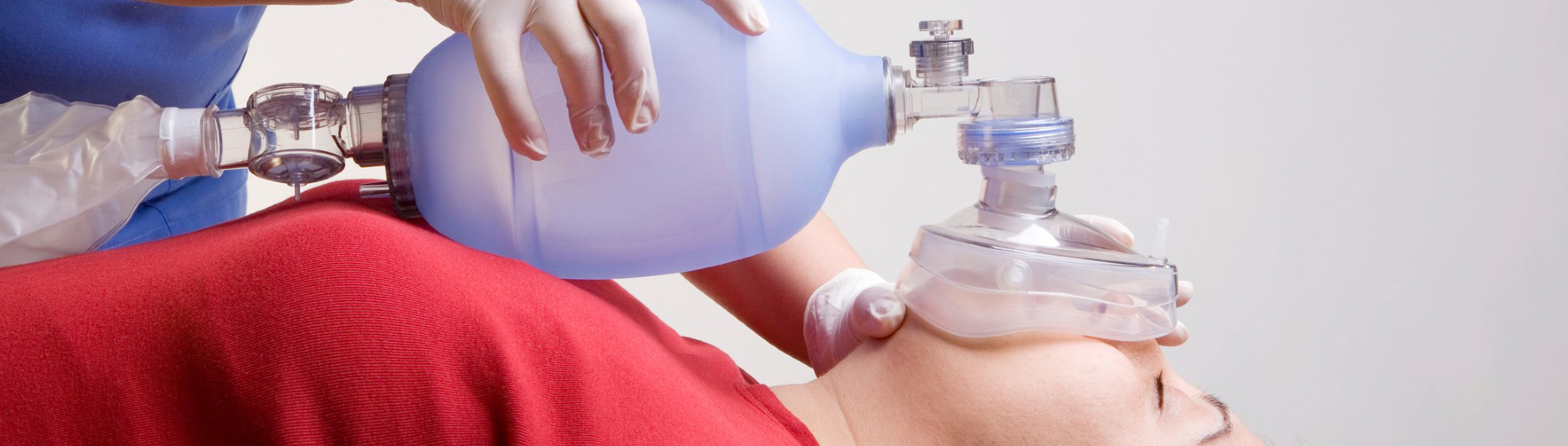

Imaginez qu'un patient s'effondre devant vous. Il cesse de respirer. Sauriez-vous quoi faire dans les 60 premières secondes ? Votre premier réflexe : positionner le patient et dégager les voies respiratoires. Ce simple geste permet de gagner un temps précieux.masque à valve et ballon (BVM)administre la respiration de sauvetage nécessaire pour maintenir l'apport d'oxygène.
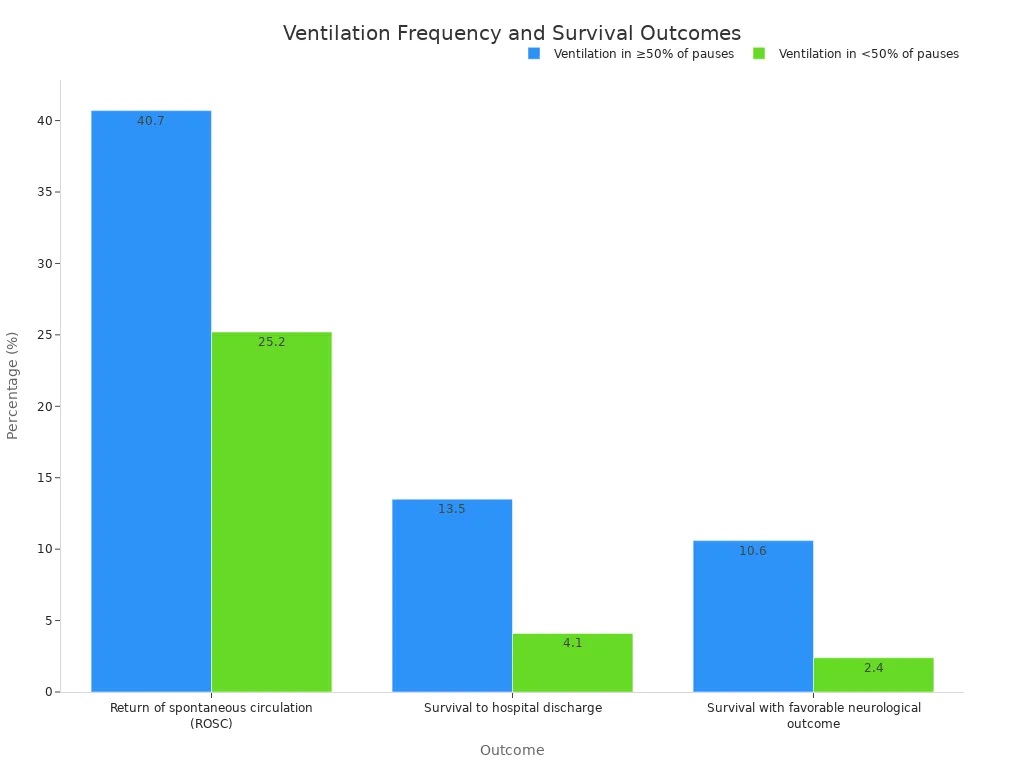
Les données issues d'études sur l'arrêt cardiaque démontrent l'importance de ce facteur. Les patients ayant bénéficié d'une ventilation mécanique pendant au moins la moitié des pauses de réanimation cardio-respiratoire ont présenté un retour à une circulation spontanée (RACS) préhospitalier dans 40,7 % des cas, contre 25,2 % pour ceux ayant reçu une ventilation moins fréquente. Le taux de survie jusqu'à la sortie de l'hôpital a presque triplé.
La maîtrise de cette technique de ventilation au ballon est une compétence essentielle en soins d'urgence. Les étapes sont conformes aux recommandations standard de réanimation. Un équipement de qualité, comme les masques à valve unidirectionnelle (BVM), est nécessaire.Tianzuo MedicalElle assure une ventilation efficace. Votre formation aux premiers secours vous fournit les bases. La certification en secourisme de base enseigne ces principes fondamentaux. Tout secouriste devrait s'entraîner jusqu'à ce que cela devienne un réflexe.
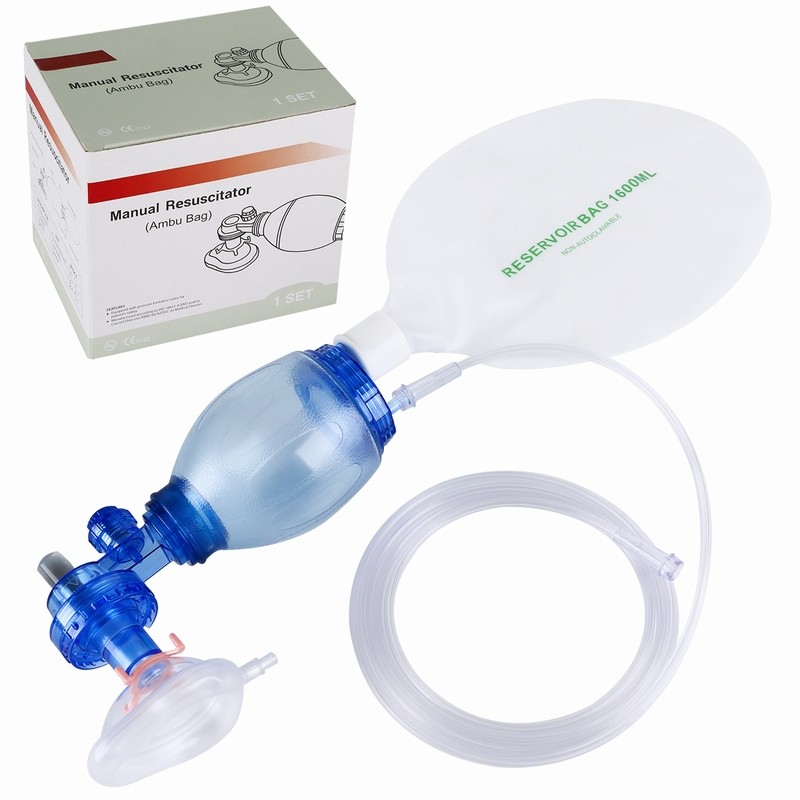
Un masque à valve et ballon est unréanimateur manuelCe dispositif assure une ventilation à pression positive aux patients incapables de respirer correctement par eux-mêmes. Il suffit de presser le ballon autogonflable pour insuffler de l'air ou de l'oxygène dans les poumons du patient, puis de le relâcher pour permettre l'expiration. Ce dispositif fait le lien entre la prise en charge de base des voies respiratoires et les interventions plus avancées, vous permettant de contrôler chaque insufflation.
Comprendre chaque partie du masque à valve et ballon vous aide à l'utiliser efficacement en cas d'urgence.Chaque composant joue un rôle spécifique pour assurer une ventilation sûre.
|
Composant |
Fonction |
|---|---|
|
sac réservoir d'oxygène |
Stocke l'oxygène pour assurer un apport élevé en FiO2 ; se remplit lorsque l'oxygène est épuisé.L'approvisionnement est adéquat |
|
Entrée d'oxygène |
Se connecte à une source d'oxygène pour fournir un apport supplémentaire d'oxygène. |
|
Soupape d'admission (trois clapets) |
Contrôle le débit de gaz : la membrane du disque d’admission empêche le reflux ; le clapet du réservoir d’entrée permet l’admission d’air ambiant en cas d’insuffisance d’oxygène ; le clapet du réservoir de sortie libère la surpression pour éviter tout dommage. |
|
sac de ventilation |
Sac autogonflant qui se compresse pour livrerr respire ; se rétracte pour se remplir d'oxygène ou d'air |
|
Valve patient |
Dirige le flux inspiratoire vers le patient et le flux expiratoire vers l'extérieur afin d'éviter la réinhalation ; comprend des orifices d'inspiration et d'expiration |
|
soupape de décharge de pression |
Prévient la pression excessive, notamment chez les enfants. |
|
Valve PEEP |
Se fixe à l'orifice expiratoire pour maintenir une pression expiratoire positive |
Le sac de ventilation se rétracte automatiquement après chaque compression, aspirant ainsi de l'air frais. Le système de valve unidirectionnelle garantit que l'air expiré s'évacue sans se mélanger à l'oxygène inspiré. Il est important de vérifier chaque composant avant utilisation, en particulier les valves, car un clapet bloqué peut compromettre l'ensemble du processus de ventilation.
Vous aurez recours au ballon de réanimation à valve unidirectionnelle (BVM) dans plusieurs situations critiques. L'insuffisance respiratoire est la plus fréquente : la respiration du patient est alors trop superficielle ou trop faible pour maintenir une oxygénation adéquate. L'arrêt cardiaque exige une ventilation immédiate au BVM pendant la réanimation cardio-respiratoire, car les compressions thoraciques seules ne suffisent pas à oxygéner le cerveau. Vous utiliserez également cet appareil pour la préoxygénation avant l'intubation, en remplissant les poumons du patient d'oxygène à haute concentration afin de créer une marge de sécurité pendant la procédure.
Votre formation aux premiers secours insiste sur la reconnaissance rapide de ces situations. La décision de commencer la ventilation au ballon doit être prise dans les secondes qui suivent l'identification d'une respiration insuffisante. Retarder cette intervention réduit les chances de survie du patient. Dans tous les cas, votre objectif reste le même : administrer de l'oxygène efficacement tout en préparant la prise en charge définitive des voies aériennes. Le ballon Ambu que vous tenez représente un maillon essentiel de la chaîne de survie, et la prise en charge des voies aériennes commence par un positionnement et une étanchéité corrects du masque.
Avant même d'administrer une seule insufflation, vous devez préparer votre matériel et votre patient. Cette phase de la gestion des voies aériennes est déterminante pour la réussite ou l'échec de votre ventilation au ballon. Une ventilation efficace au ballon exige une préparation minutieuse.
Votre première tâche consiste à choisir la taille de masque appropriée. Les masques pour adultes, enfants et nourrissons diffèrent par leur forme et leur volume. Un masque mal ajusté crée des espaces et des fuites. Inspectez chaque composant du masque à valve et ballon pour détecter tout dommage visible. Pressez le ballon et observez-le reprendre sa forme initiale. Cela confirme l'intégrité du masque. Testez la valve de sécurité en comprimant le ballon et en vérifiant qu'elle s'ouvre et se ferme correctement. Inspectez le masque pour détecter toute fissure, déchirure ou usure du rembourrage pouvant causer des fuites. Un système étanche garantit une performance optimale.
Assemblez le ballon autogonflable, le masque adapté, la tubulure d'oxygène et le réservoir. Branchez l'alimentation en oxygène et réglez le débit entre 10 et 15 L/min. Serrez fermement tous les raccords. Une tubulure d'oxygène mal fixée peut se débrancher pendant l'utilisation. Une précaution importante s'impose lors du stockage : si un insufflateur manuel (ballon-masque) n'est pas pliable, le stocker comprimé pendant une période prolongée peut réduire l'élasticité du ballon. Cela compromet son efficacité en cas d'urgence. Les soupapes de décharge de pression, courantes sur les modèles pédiatriques, empêchent la surpression pulmonaire. Une pince de dérivation permet une commande manuelle lorsque la pression est cliniquement nécessaire. Votre formation aux gestes de base de réanimation (GBR) doit inclure la vérification de ces points. De bonnes pratiques de GBR permettent de gagner un temps précieux lors de véritables urgences.
Allongez le patient sur le dos, sur une surface plane et ferme. Cette position permet d'accéder aux voies respiratoires. Libérez les voies respiratoires en utilisant les techniques de positionnement appropriées. Chez les patients non traumatisés, utilisez la manœuvre de bascule de la tête et de soulèvement du menton. Basculez la tête en arrière en appuyant sur le front. Soulevez le menton vers l'avant du bout des doigts. Ce mouvement permet de dégager la langue du fond de la gorge.
Chez les patients présentant une suspicion de lésion médullaire, privilégiez la manœuvre de subluxation mandibulaire. Placez vos doigts derrière l'angle de la mâchoire et soulevez-la vers l'avant sans incliner la tête. Ces deux techniques exploitent les saillies osseuses pour un effet de levier. Évitez de comprimer les tissus mous sous la langue, car cela pourrait provoquer une obstruction.
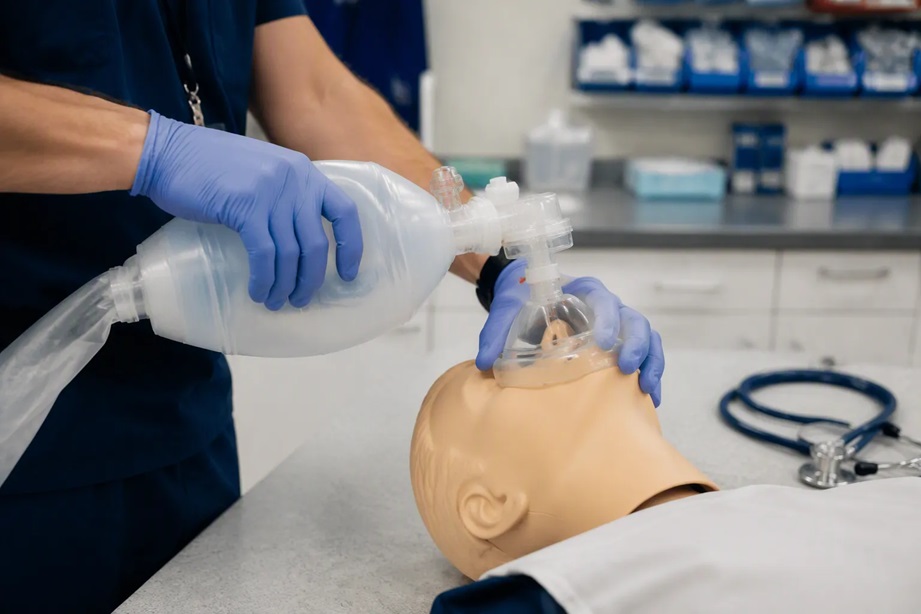
Positionnez correctement le masque. Placez l'extrémité étroite sur l'arête du nez. Le masque doit couvrir entièrement le nez et la bouche, sans laisser d'espace. Si le patient est édenté, le maintien de la prothèse dentaire peut améliorer l'étanchéité du masque. Les canules nasopharyngées et oropharyngées aident à repousser la langue et les tissus mous vers l'avant. Elles sont particulièrement utiles chez les patients inconscients. Votre technique doit inclure la vérification du soulèvement de la cage thoracique à chaque insufflation. Ceci confirme l'efficacité de votre ventilation au ballon. Les ballons à valve (BVM) de fabricants reconnus offrent des performances constantes.
L'utilisation d'un insufflateur manuel seul représente un défi de taille. Il faut gérer les voies respiratoires, assurer l'étanchéité du masque et actionner le ballon simultanément. La maîtrise de cette technique d'insufflation en solitaire demeure une compétence fondamentale en secourisme. La réussite repose sur deux actions essentielles : obtenir une étanchéité parfaite et délivrer les insufflations avec un contrôle précis.
The foundation of effective bvm ventilation is a perfect mask seal. Without it, air escapes, and your efforts fail. The E-C clamp technique provides the mechanical advantage you need for one-handed control. Form a "C" with your thumb and index finger. Place these digits on the top of the mask, applying gentle downward pressure over the bridge of the nose and the bony part of the chin. Your remaining three fingers form an "E." Hook these fingers under the angle of the patient's jaw, along the bony ridge.
Your primary action is to lift the jaw upward into the mask. Do not push the mask down onto the face. Pushing the mask down often distorts the seal and can occlude the airway. Lifting the jaw pulls the tongue and soft tissues forward, opening the airway naturally. This lift creates the space for air to flow. Proper mask placement is confirmed when the mask covers the nose and mouth completely, with the cushion forming a seal against the skin.
Common errors during this process directly compromise ventilation. You must recognize and avoid them.
|
Error |
Impact on Ventilation |
|---|---|
|
Applying pressure to soft tissues of the neck |
Can occlude the airway, impairing ventilation. |
|
Pushing the mask down instead of lifting the jaw |
Can occlude the airway, reducing airflow. |
|
Squeezing the bag too hard or too fast |
Causes stomach insufflation, aspiration risk, and decreased cardiac output, compromising effective ventilation. |
Your goal is a stable, leak-free connection. A high-quality Bag Valve Mask (BVM) with a pliable, conforming cushion makes this seal easier to achieve and maintain.
With a secure seal established, you now focus on the breath itself. Your left hand maintains the E-C clamp. Your right hand squeezes the self-inflating bag. Compress the bag smoothly and deliberately. Aim to deliver each breath over a full second. Watch for the patient's chest to rise. This visible rise is your immediate feedback for adequate tidal volume.
You must control the volume and rate. Squeeze only one-third to one-half of the bag's total volume for an adult. A full compression forces too much air too quickly. This leads to gastric insufflation, where air enters the stomach. A distended stomach increases the risk of vomiting and aspiration. It also pushes against the diaphragm, reducing lung capacity. After each breath, allow the bag to recoil fully before delivering the next. Full recoil ensures the bag refills with oxygen.
Control your ventilation rate. For a patient with a pulse but absent breathing, provide one breath every 5 to 6 seconds. This equals 10 to 12 breaths per minute. During cardiac arrest with ongoing CPR, you will follow the 30:2 compression-to-ventilation ratio. In either case, a slow, measured pace is critical. Rapid, forceful bag squeezes are dangerous. They can decrease cardiac output by raising intrathoracic pressure, which impedes blood return to the heart.
The limitations of the one-person method are important to understand.
One-rescuer BVM ventilation with minimal training fails to deliver adequate tidal volumes, while two-rescuer BVM ventilation delivers tidal volumes more than recommended and comparable to those seen with endotracheal intubation. Therefore, two-rescuer BVM is more effective for initial resuscitation.
This evidence highlights a key point. The single-rescuer technique is physically demanding. Fatigue can quickly degrade your mask seal and the quality of your squeezes. Your bls training prepares you to use this method when you are alone. You should always call for help to transition to a two-person technique as soon as possible. ReliableBag-Valve-Mask (BVM) Resuscitatorssupport consistent performance, but your technique dictates the outcome. Focus on a good seal, watch for chest rise, and deliver slow, steady breaths to provide safe, effective positive-pressure ventilation.
When you integrate bvm ventilation into CPR, your timing matters. The goal is to deliver oxygen without interrupting blood flow. Data from a multicenter study shows the impact of effective ventilation. Patients who received lung inflation in at least half of the chest compression pauses achieved 40.7% return of spontaneous circulation. Those with less frequent ventilation reached only 25.2%. Survival to hospital discharge nearly tripled, from 4.1% to 13.5%.
Your technique during CPR follows a specific sequence. Deliver one bvm breath over one second. Watch for the chest to rise visibly. Provide only enough air to achieve this rise. Avoid over-ventilating, as excessive pressure increases intrathoracic pressure and reduces blood return to the heart. If an advanced airway is in place, you switch to continuous compressions. Give one breath every six seconds, at a ventilation rate of 10 breaths per minute, without synchronizing with compressions. A Bag-Valve-Mask (BVM) Resuscitator connected to high-flow oxygen supports this rhythm. Your bls training emphasizes minimizing interruptions in chest compressions. Every pause reduces perfusion to the brain and heart. Consistent chest movement and end-tidal CO₂ monitoring confirm effective ventilation.
The 30:2 compression-to-ventilation ratio is the standard for adult CPR. You perform 30 chest compressions, then pause briefly to deliver 2 breaths. This cycle repeats without delay. Evidence from ILCOR guidelines supports this ratio over alternatives like 15:2.
|
Outcome |
30:2 vs 15:2 Effect Estimate |
|---|---|
|
Favorable neurological function |
RR 1.34 (95% CI 1.02–1.76) |
|
Survival |
RR 1.37 (95% CI 1.19–1.59) |
|
Return of spontaneous circulation |
RR 1.11 (95% CI 1.00–1.23) |
The 30:2 ratio prioritizes chest compressions. By limiting pauses to 2 breaths, you maintain blood flow while still providing ventilation. Each breath should last one second. Squeeze only one-third to one-half of the bag volume. This prevents gastric insufflation and maintains cardiac output. During cardiac arrest, a two-person bvm technique is far more effective. One rescuer holds the mask seal while the other squeezes the bag. This reduces fatigue and delivers more consistent tidal volumes. Your bls certification should include practice with both single-rescuer and two-person techniques. Mastering this ratio during CPR ensures you balance ventilation with circulation, giving the patient the best chancefor survival.
When a second rescuer arrives, you should transition immediately to the two-person approach. This method transforms your bvm from a challenging solo task into a coordinated team effort. The two-rescuer technique dramatically improves the quality of bvm ventilation and represents the standard of care in resuscitation scenarios. Your bls training should emphasize this transition as a priority once help arrives.
The two-rescuer technique assigns distinct responsibilities to each team member. Rescuer 1, the Airway Manager, positions at the patient's head. This rescuer uses both hands to secure the mask with a double E-C clamp technique. Your thumbs and index fingers form a "C" shape on the mask surface. Your middle, ring, and little fingers form an "E" along the jawline to lift the mandible upward. You hold the mask stable on the face, lifting the jaw toward the mask rather than pressing the mask down. This action creates a reliable seal without compressing soft tissues. You must reassess the seal after every breath to maintain effectiveness.
Rescuer 2, the Bag Handler, manages the ventilation bag. This rescuer delivers slow, controlled squeezes and stops when visible chest rise occurs. You watch the patient's chest carefully for adequate rise and check for air leaks around the mask. You avoid forceful breaths that cause gastric inflation. Your body mechanics matter: maintain a comfortable position without twisting or reaching awkwardly.
|
Rescuer |
Specific Duties |
|---|---|
|
Rescuer 1 (Airway Manager) |
Positions at the patient's head;uses double E-C clamp; holds mask stable; lifts jaw toward mask; reassesses seal after each breath |
|
Rescuer 2 (Bag Handler) |
Delivers slow, controlled squeezes; stops at visible chest rise; watches for leaks; avoids forceful breaths; maintains proper body mechanics |
The two-rescuer technique offers clear advantages over the single-rescuer method. You achieve a better mask seal because one person dedicates both hands to airway management. This eliminates the struggle of maintaining the E-C clamp while simultaneously squeezing the bag. The result is more consistent tidal volumes with each breath.
Rescuer fatigue decreases significantly. In the one-person method, your hands tire quickly, degrading the seal quality. With two rescuers, each person focuses on one task, sustaining high performance for longer periods. This matters during prolonged resuscitation efforts where quality degrades over time.
Coordination between rescuers follows a specific sequence:
Rescuer 1 performs 30 chest compressions, counting aloud to maintain rhythm.
Rescuer 2, positioned at the head, holds the bag-mask with a C-shaped grip using thumb and index finger to seal the mask, while remaining fingers lift the jaw to open the airway.
Rescuer 2 administers two breaths, each lasting one second, while observing chest rise.
Rescuers switch duties every two minutes, with the rescuer performing compressions calling out "switch."
Counting out loud helps both rescuers anticipate breaths and maintain the correct compression-to-ventilation ratio. This verbal coordination prevents missed breaths or delayed compressions. Your bls training should include practice with this switching protocol to build muscle memory.
The two-rescuer technique also reduces the risk of over-ventilation. With one person dedicated to watching chest rise, you can stop each squeeze precisely when the chest reaches full expansion. This prevents the gastric insufflation and decreased cardiac output associated with excessive pressure. Bag-Valve-Mask (BVM) Resuscitators with clear markings help the Bag Handler gauge appropriate squeeze volumes.
Evidence supports this approach strongly. One-rescuer bvm ventilation with minimal training fails to deliver adequate tidal volumes. Two-rescuer bvm ventilation delivers tidal volumes more than recommended and comparable to those seen with endotracheal intubation. Therefore, two-rescuer bvm ventilation is more effective for initial resuscitation. When a second rescuer is available, this method is always the recommended approach. Your Bag Valve Masks (BVM) equipment performs best when paired with proper two-person technique. Master this coordination through regular practice, and you will provide safer, more effective ventilation during critical emergencies.
You must confirm your bvm delivery is working. The most reliable indicator remains visible chest rise and fall. As one clinical educator warns, "If you do not see the patient's chest rise and fall, your seal is not tight or the airway is not open, and the patient is not receiving the life-saving oxygen they need." Monitor oxygen saturation. A rising SpO₂ reading confirms effective ventilation. Watch for heart rate normalization. In bradycardic patients, an improving heart rate signals adequate oxygenation. Check for improved skin color as circulation returns. Your bls training teaches you to reassess these signs of effective ventilation continuously. Do not assume your technique is correct without verifying these indicators.
Even trained professionals make mistakes. A study by Culbreth and Gardenhire (2021) inHeart & Lungfound that respiratory therapists frequently fail to meet recommended ventilation parameters, including tidal volume and rate. Underventilation often results from a poor mask seal. Overventilation occurs when you squeeze too hard or too fast. Both errors reduce the effectiveness of your bvm ventilation.
|
Pitfall |
Corrective Action |
|---|---|
|
Over-ventilation |
Deliver each breath overone second. Squeeze only one-third to one-half of the bag volume. |
|
Poor mask seal |
Use the E-C clamp technique. Lift the jaw into the mask. Grasp bone, not soft tissue. |
|
Incorrect head positioning |
Reapply the head tilt-chin lift or jaw thrust maneuver to open the airway. |
|
Failure to monitor |
Check chest rise, SpO₂, and heart rate after every breath cycle. |
Over-ventilation raises intrathoracic pressure and decreases cardiac output. Control your driving pressure. Use a gentle squeeze over the full one-second inspiratory time. Allow complete exhalation by following the three-second rule. This prevents gas trapping and maintains proper ventilation.
Poor mask seal is the most common cause of underventilation. If you grasp the soft tissue beneath the mandible, you push the tongue into the posterior pharynx and worsen obstruction. Pull the mandible into the mask rather than pushing the mask onto the face.
Optimize airflow with airway adjuncts. An oral or nasal airway creates a consistent pathway that promotes laminar flow and reduces turbulence. If ventilation remains inadequate, the tongue may be obstructing the airway. Insert an adjunct to displace the tongue forward.
Monitor bag compliance. If the bag feels stiff, lung compliance is low. If pressure builds quickly, resistance is high. Adapt your technique accordingly. For high-resistance conditions like asthma, extend exhalation times. For low-compliance conditions like CHF, consider applying PEEP. Your bag valve mask technique must adapt to the patient's physiology.
Your bls training provides the foundation. Regular practice on mannequins builds muscle memory. Reliable Bag-Valve-Mask (BVM) Resuscitators support consistent performance, but your technique determines the outcome.
Mastering the bag valve mask requires more than reading. You must practice each step until it becomes instinct. Prepare your equipment. Position the patient. Seal the mask with the E-C clamp technique. Ventilate slowly and monitor the chest rise. A good seal forms the foundation of effective bvm ventilation. Over-ventilation causes harm. Remember the goal: slow and steady breaths. Your ambu bag skills need regular practice on mannequins. This builds muscle memory for real emergencies. Enroll in bls or ACLS training. These courses provide hands-on training with professional instructors. Keep your ambu device ready for immediate use. Reliable equipment like Bag-Valve-Mask (BVM) Resuscitators supports your cpr efforts. Your bls certification prepares you for this critical intervention.
Watch the patient's chest. Each breath should take one full second. If you deliver more than 10-12 breaths per minute for a patient with a pulse, you're going too fast. Rapid ventilation causes stomach inflation and reduces blood flow to the heart.
Stop ventilation immediately. Turn the patient's head to the side. Clear the airway with suction or a finger sweep. Reposition the head and resume bvm ventilation. Check that the mask seal remains intact before continuing. This prevents aspiration into the lungs.
No. Pediatric patients require smaller mask sizes and lower bag volumes. Use a pediatric-specific Bag-Valve-Mask (BVM) Resuscitator with a pressure relief valve. Deliver breaths gently, watching for subtle chest rise. Over-ventilation harms children faster than adults due to their smaller lung capacity.
Assign one rescuer to hold the mask seal during transport. That person focuses only on maintaining the E-C clamp position. Another rescuer squeezes the bag. This division of roles keeps the seal stable while the stretcher moves. Practice this coordination during your bls training.
Un masque de poche utilise l'air expiré et délivre environ 16 % d'oxygène. Un insufflateur manuel, relié à une source d'oxygène, délivre jusqu'à 100 % d'oxygène. Les insufflateurs manuels permettent également un meilleur contrôle du volume courant et réduisent la fatigue du secouriste lors des réanimations prolongées.

 Réseau IPv6 pris en charge


 français
 English
 فارسی
فارسی Deutsch
 русский
 italiano
 español
 português
 العربية
 Türkçe